2026-04-13
MNP Consumer Debt Index: Newfoundland and Labradorians experiencing financial whiplash as economic uncertainty persists
MNP Consumer Debt Index
Nearly three-quarters say rising food and gas prices are straining their finances.
Nearly nine in 10 Quebecers are more cautious about taking on new debt, the highest proportion among all provinces.

MONTREAL, QC – April 13, 2026 – Many Quebecers are feeling the effects of ongoing economic uncertainty as conditions continue to evolve, reshaping household behaviours. Nearly three in five (57%) say they are experiencing financial whiplash as shifting conditions repeatedly disrupt their financial plans, according to the latest MNP Consumer Debt Index. Seven in 10 (70%) say rising prices for essentials like food and gas are straining their finances. Three-quarters (74%) say they are cutting back on spending, and Quebecers are more likely than those in any other province (88%) to be more cautious about taking on new debt. This reflects a heightened sense of caution as cost pressures and uncertainty persist.
These pressures are also shaping how Quebecers view their financial progress and future plans. Three in five (59%) say they feel they are working harder financially but not getting ahead. Two-thirds (65%) say they are delaying major financial decisions because of unpredictable conditions.
“Many Quebecers are not just feeling financial pressure — they are adjusting to a shifting environment, which makes it more difficult to budget, stay ahead financially, and plan for the future,” says Frédéric Lachance, a Licensed Insolvency Trustee with MNP LTD in Montreal. “High costs and broader global uncertainty are outside of someone’s control, contributing to a sense of financial whiplash. It can be harder to manage unexpected expenses or make confident financial decisions when conditions keep changing, whether that’s taking on debt, making a significant purchase, or planning for the longer term.”
The average amount Quebecers have left at the end of the month has risen to $841, up from $744 last quarter. However, this remains the lowest amount compared to all other provinces, suggesting comparatively less financial flexibility. More than two in five Quebecers (44%, +1 pt) report being $200 or less away from financial insolvency each month. Three in 10 (30%, +2 pts) say they do not earn enough to cover their bills and debt payments.
While the Bank of Canada’s recent decision to hold its key rate at 2.25 percent may ease distress for some Quebecers, three in five (61%, -5 pts) still say they need interest rates to go down. However, fewer Quebecers report concern about rising rates compared to last quarter. Slightly over half (53%, -7 pts) fear financial trouble if interest rates increase, and two in five (40%, -9 pts) are concerned that rising interest rates could move them toward Bankruptcy. The same proportion (40%, -12 pts) remain concerned about their ability to repay their debts, even if interest rates decline. This indicates that while sentiment has improved, uncertainty around borrowing costs continues to weigh on households. This limited capacity is evident in how Quebecers would respond to even modest increases in borrowing costs, as only one in five (20%) say they could absorb an additional $130 in monthly interest payments, while a third (32%) say they could not absorb this increase.
“Many Quebecers remain cautious about what could come next, even with interest rates holding steady for now,” says Lachance. “While some concerns have eased compared to last quarter, households with tight budgets may still find it difficult to absorb borrowing costs or maintain them at current levels, especially if conditions shift later this year.”
Quebecers’ net personal debt rating jumped to 22 points (+14 pts), a significant increase from the previous quarter, marking a notable shift in how individuals perceive their debt situation. However, this shift in sentiment does not necessarily mean underlying pressures have eased. Many households continue to navigate an economy where financial challenges persist without a clear endpoint.
More than a quarter of Quebecers (27%, +4 pts) say their debt situation has improved compared to a year ago, while fewer (17%, -3 pts) say it has worsened. However, a significant proportion continue to report ongoing challenges and nearly two in five (38%, -4 pts) still fear job loss in their household.
These financial pressures are also reflected in how Quebecers are approaching tax season.
One in six Quebecers (17%) say they expect to owe taxes they are unable to pay. This includes nearly one in 10 (8%) who will delay paying, as they need more time to figure out how they will come up with the funds, and a similar proportion (9%) who say they will need to borrow or go into debt to meet their obligations. Nearly one in five (15%) Quebecers say they expect to owe taxes and will need to dip into savings or money set aside for other purposes to pay these taxes, the highest proportion among all provinces.
“Tax season can put added pressure on household finances,” says Lachance. “A refund can help some Quebecers catch up on bills or pay off debts. For others, owing money may mean using savings or relying on credit, which can contribute to financial strain over time.”
Lachance says that using additional debt to cover expenses and obligations can be an early sign that financial pressures are increasing, and that it may be time to review your financial situation.
“It can be difficult to know where to begin when finances feel uncertain or out of your control,” says Lachance. “However, it can be a good opportunity to pause and reexamine the situation if someone is relying more on credit or stretching their budget to keep up with expenses. Looking more closely at income, expenses, and available options to ease the pressure can help individuals regain a sense of control. These are steps anyone can take to better understand and manage their finances, regardless of what’s happening in the economy.”
“Speaking with a Licensed Insolvency Trustee can help provide clarity and direction for those who feel unsure about their financial situation,” Lachance says. “These conversations can help individuals get a clear understanding of their financial picture in a supportive, non-judgmental environment so they can explore their options and move forward with a plan that works for them.”
Licensed Insolvency Trustees are the only federally regulated debt professionals in Canada who can assist with all the debt relief options, including Consumer Proposals and Bankruptcy, stop harassment from debt collectors, and discharge people from debt. They work with individuals to understand their unique circumstances and explore a range of solutions, from adjusting payment plans and negotiating with creditors to formal debt relief options.
MNP’s national team of Licensed Insolvency Trustees offer free consultations across the country to help severely indebted Quebecers get unbiased debt advice, understand their rights, and determine the best path forward.
MNP LTD, a division of the national accounting firm MNP LLP, is the largest insolvency practice in Canada. For more than 50 years, our experienced team of Licensed Insolvency Trustees and advisors have been working with individuals to help them recover from times of financial distress and regain control of their finances. With more than 240 offices from coast to coast, MNP helps thousands of Canadians each year who are struggling with an overwhelming amount of debt. Visit MNPdebt.ca to contact a Licensed Insolvency Trustee or use our free Do-it-Yourself (DIY) debt assessment tools. For regular, bite-sized insights about debt and personal finances, subscribe to the MNP 3-Minute Debt Break Podcast.
The MNP Consumer Debt Index measures Canadians’ attitudes toward their consumer debt and gauges their ability to pay their bills, endure unexpected expenses, and absorb interest-rate fluctuations without approaching insolvency. Conducted by Ipsos and updated quarterly, the Index is an industry-leading barometer of financial pressure or relief among Canadians.
Now in its thirty-sixth wave, the Index remains at 87 points, unchanged from last quarter. Visit MNPdebt.ca/CDI to learn more.
The data was compiled by Ipsos on behalf of MNP LTD between March 10 and March 11, 2026. For this survey, a sample of 2,000 Canadians aged 18 years and over was interviewed. Weighting was then employed to balance demographics to ensure that the sample's composition reflects that of the adult population according to Census data and to provide results intended to approximate the sample universe. The precision of Ipsos online polls is measured using a credibility interval. In this case, the poll is accurate to within ±2.7 percentage points, 19 times out of 20, had all Canadian adults been polled. The credibility interval will be wider among subsets of the population. All sample surveys and polls may be subject to other sources of error, including, but not limited to, coverage error and measurement error.
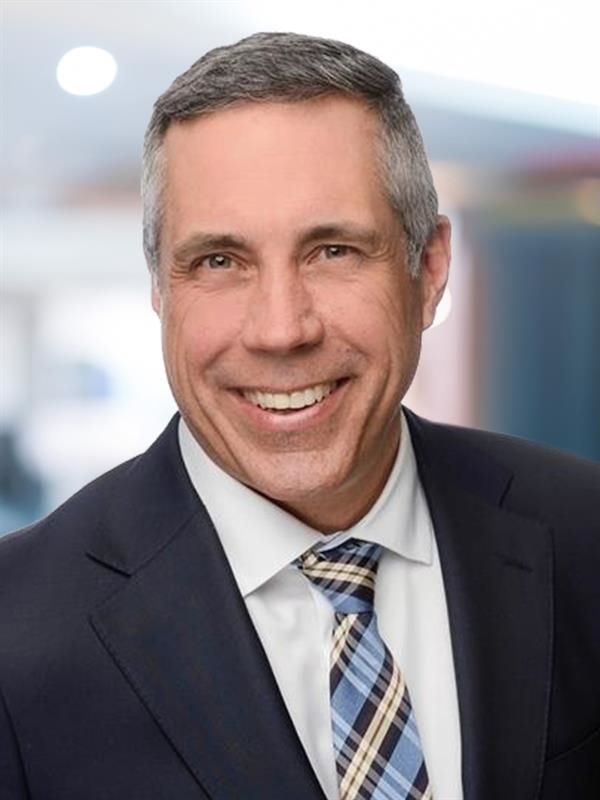
Vice-président principal, SAI
Senior Vice-President
Servicing: Longueuil (Longueuil metro), Alma, Amos, Becancour, Beloeil , Berthierville, Chicoutimi, Châteauguay, Cowansville, Farnham , Gaspé, Granby , Hochelaga, Joliette, Sainte-Agathe, Laval, Lévis, Matane, Montréal, Pointe-aux-Trembles, Pointe-Claire, Repentigny, Rimouski, Rouyn-Noranda, Saint-Georges, Saint-Hyacinthe, Saint-Laurent, Sainte-Thérèse, Sept-Îles, Shawinigan, Sherbrooke, Sorel-Tracy , St-Félicien, Ste-Foy, Terrebonne , Thetford Mines, Trois-Pistoles, Trois-Rivières, Val-d'Or
2026-04-13
MNP Consumer Debt Index
Nearly three-quarters say rising food and gas prices are straining their finances.
2026-04-13
MNP Consumer Debt Index
More than half (56%) say they are experiencing financial whiplash as shifting conditions repeatedly disrupt their financial plans, according to the latest MNP Consumer Debt Index.
2026-04-13
MNP Consumer Debt Index
Nearly three-quarters say rising food and gas prices are straining their finances.

